The Committee Room Record: UKIP MEPs and the Unseen Work of the 2014–2020 Parliament
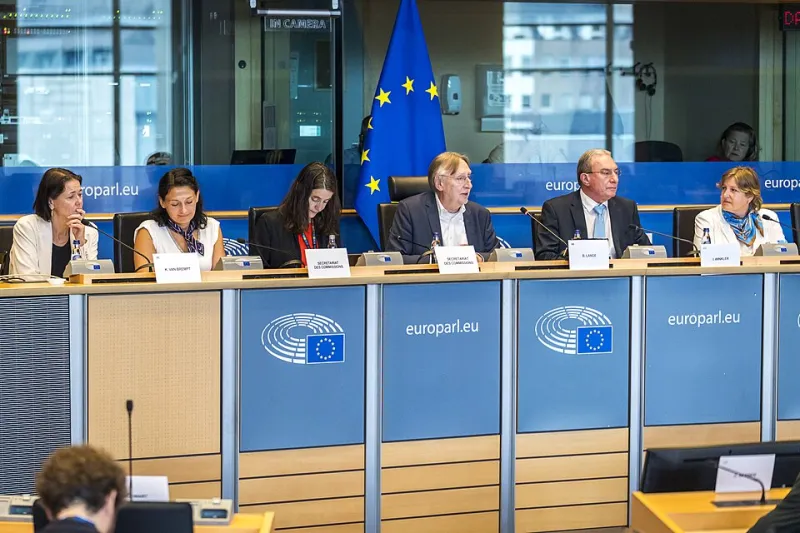
Photo: Daina Le Lardic, European Parliament, via Wikimedia Commons
The popular image of UKIP in the European Parliament is a plenary image: a leader with a flag, a well-aimed insult, a walkout. That image was real, but it was not the whole record. Between 2014 and 2020, UKIP's MEPs also sat on committees, drafted amendments, attended meetings and occasionally shaped the text that emerged from Brussels and Strasbourg. The question is whether that quieter work amounted to influence or merely to presence.
This review draws on the European Parliament's public committee lists, attendance registers, tabled amendments and rapporteur appointments for the 2014–2020 term. The figures are rounded and should be treated as indicative rather than definitive. Attendance data in particular is an imperfect measure: being in the room is not the same as being effective, and absence does not always mean indifference. Even so, the pattern is clear enough to invite a judgment.
The committee map
UKIP's 2014 intake was large enough to secure seats on most of the Parliament's standing committees, but not large enough to secure seniority. The party was not part of the grand coalition between the European People's Party and the Socialists and Democrats, and its Europe of Freedom and Direct Democracy group was unstable. That limited its access to coordinators' meetings, where committee business is often brokered.
Among the most common destinations for UKIP MEPs were Employment and Social Affairs, Industry, Research and Energy, Environment, Public Health and Food Safety, Economic and Monetary Affairs, Fisheries, Regional Development and Foreign Affairs. The spread reflected the party's broad anti-EU pitch rather than a narrow sectoral focus. Fisheries and regional development offered obvious campaigning material. Economic and monetary affairs allowed the party to talk about the euro and financial regulation. Employment and environment committees allowed it to engage with regulation in a way that reached beyond Westminster.
| Committee area | UKIP use of the seat |
|---|---|
| Fisheries | Regionalisation, discard rules and coastal communities |
| Employment and social affairs | Labour market regulation and small firms |
| Economic and monetary affairs | Eurozone governance and financial services |
| Environment and public health | Medicines, chemicals and public health |
| Regional development | Structural funds and spending visibility |
| Foreign affairs | Sanctions, Ukraine and the EU's external role |
Rapporteur roles were rare. A rapporteur is the MEP responsible for steering a legislative file through committee, and the role is usually allocated in proportion to group size. UKIP MEPs did not secure lead roles on flagship files. A small number acted as shadow rapporteurs or drafted opinions, but the party's main currency was opposition, not authorship.
Amendments: volume and traction
The amendment record tells a similar story. UKIP MEPs tabled amendments in high volume, especially on budgets, foreign policy motions and plenary resolutions. Many were symbolic. They were designed to put the party's position on the record, to force a vote or to generate a press line. That is a legitimate opposition tactic, but it is not the same as legislative influence.
Substantive amendments on fisheries, financial services, data protection and employment law were fewer. Some were adopted in committee or absorbed into broader compromises. Most fell. The pattern is typical of parties outside the main governing blocs in the European Parliament. Amendments require coalition-building, and UKIP's group was neither large nor stable enough to provide a reliable base.
There were exceptions. Fisheries was the area where UKIP's committee presence was most visible. The party's MEPs used the Fisheries Committee to press arguments about regionalisation and the common fisheries policy that later fed directly into the Leave campaign. Whether those arguments changed the committee's text is harder to establish; whether they changed the UK debate is not in doubt.
Attendance and the plenary contrast
Attendance data is uneven, but it points to a familiar contrast. Plenary attendance was generally higher than committee attendance. Rounded figures from public registers suggest that UKIP's average plenary attendance stayed in the high 70s to low 80s per cent across the term, while committee attendance for some members fell below 50 per cent in particular years.
That gap is not unique to UKIP. MEPs of all parties prioritise plenary votes, press opportunities and constituency work. But for UKIP the gap had a political logic. Plenary speeches reached UK audiences. Committee meetings did not. A party whose central aim was to argue for leaving the EU had an incentive to treat Brussels as a stage rather than a workshop.
Some UKIP MEPs did build reputations for regular committee work. Others were rarely seen. The difference mattered. Members who attended consistently were better placed to question officials, build relationships with other groups and understand the technical detail behind a file. Members who did not were dependent on staff and group briefings. Attendance alone does not measure influence, but persistent absence narrows the routes through which influence can be exercised.
Did it leave a mark?
The honest answer is mixed. UKIP's European Parliament presence left a clear mark on British politics. It provided a platform, a stream of stories and a cadre of campaigners. Its committee work was less visible but not irrelevant. Fisheries policy, regional funding and financial services regulation were all areas where UKIP MEPs used committee seats to sharpen arguments that later appeared in the referendum campaign.
As legislators, however, UKIP remained a minority voice. It did not author major files. It did not build durable coalitions. It did not turn the European Parliament into a vehicle for its own policy programme. Its impact was as a critic and agenda-setter, not as a legislative architect.
That is not a dismissal. Opposition parties in any parliament often measure success by the arguments they force rather than the laws they write. But the committee record does expose the limits of the UKIP MEP era. The party was effective at telling voters what was wrong with Brussels. It was less effective at using Brussels to demonstrate what could be done differently.
When the UK left the European Parliament in 2020, the plenary images were the ones that survived. The committee papers, amendment lists and attendance registers tell a quieter story. They show a party that was present, sometimes diligent, often divided and rarely decisive. The record is not one of hidden legislative mastery. It is one of a protest movement operating inside an institution it wanted to leave.