Passes Returned: The Quiet Close of UKIP’s European Parliamentary Operation
The European Parliament does not do dramatic exits. It does procedure. For UKIP, the end of its MEP presence arrived not with a single decisive vote but with a sequence of small administrative acts: a final plenary sitting, a last recorded division, a pass returned to security, a laptop handed back, a staff contract allowed to lapse. The archive of that week is thin, and that thinness is itself the story.
The Calendar Correction
Any account of UKIP’s final week in the European Parliament has to begin with a correction. The party’s MEPs did not sit in the chamber until Brexit on 31 January 2020. The 2014 intake’s mandate ended on 1 July 2019, after the delayed European elections of May that year, in which UKIP won no seats. The final week was therefore late June 2019, as the 2014–2019 Parliament wound down and the remaining UKIP members prepared to leave.
The farewells of January 2020, with their flags and speeches, belonged to other UK parties. UKIP was already absent. That distinction matters for anyone using the European Parliament’s records: the party’s MEP era ended in the summer of 2019, not at the formal moment of Brexit. The later ceremony was a reminder of how quickly the institution had replaced one UK contingent with another.
The Last Division
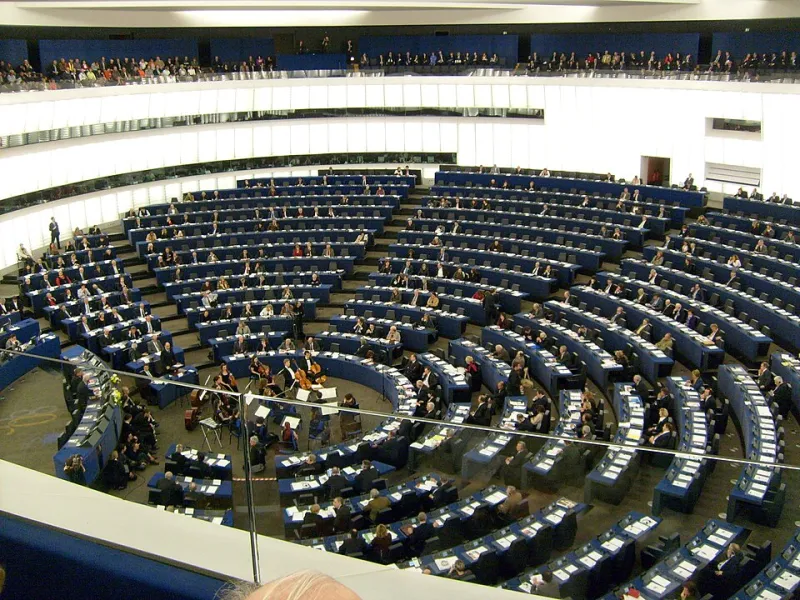
Voting records from the final plenary sittings show a group already reduced in number and influence. The last divisions in which UKIP MEPs took part were largely procedural, the ordinary business of a parliament closing its books before an election. There was no great confrontation, no final set-piece debate in which the party’s euro-scepticism could be restated for the record. The arithmetic of the chamber had moved on.
For an archive, the last division matters less for its subject than for what it shows about presence. A party that had once sent 24 MEPs to Brussels and Strasbourg was by 2019 a rump. Its final votes were cast by members whose group had fragmented, whose alliances had shifted and whose national party was preparing for an election it would lose. The voting record is not a monument. It is a ledger of diminished capacity.
That ledger also records absence. Abstentions, missed votes and procedural withdrawals are part of the story. They suggest a delegation that was no longer fighting the institution so much as waiting to leave it. The European Parliament’s records do not explain motive, but they do show pattern: fewer interventions, fewer amendments, fewer chances taken.
Passes, Laptops and the Paper Trail
The parliament’s leavers’ checklist is unsentimental. Security passes are cancelled. Office keys are returned. Laptops, phones and encrypted devices are wiped or handed back. Financial declarations are closed. Staff contracts, often tied to the MEP’s mandate, are wound down or transferred. In Brussels and Strasbourg, rooms are stripped of papers, furniture and the accumulated clutter of five years.
Former staff describe the final days as a mixture of haste and boredom. There were boxes to pack, files to sort and colleagues to say goodbye to, but also long waits for signatures and clearances. The institution treats a departing political group as a routine administrative event. For the people involved, it is the end of a working life.
Some UKIP staff moved quickly to successor campaigns or to the new Brexit Party delegation. Others left politics altogether. The archive holds only fragments of this: a leaving card, a forwarded email, a note in a committee file. The bureaucratic end of UKIP’s MEP presence is therefore harder to document than its speeches, but it is just as revealing.
What the Exit Revealed
UKIP spent years attacking the European Parliament as wasteful, undemocratic and remote. Yet its MEPs also relied on the institution’s resources, staff allowances, committee seats and speaking time. The final week exposed that dependence. Leaving was not a clean break from a hostile body; it was a negotiation with landlords, HR departments and finance offices.
The absence of ceremony was fitting. UKIP had never sought the parliament’s approval, and the parliament had never regarded UKIP as a central actor. The party left as it had often operated: outside the consensus, inside the building. The later Brexit farewell in January 2020, staged by other UK MEPs, confirmed the point. UKIP’s final week had already happened, quietly, six months earlier.
For the archive, the lesson is to read the record against the calendar. The last division, the last pass returned and the last office cleared tell a story not of triumph or defeat, but of institutional routine. UKIP’s MEP era ended in paperwork as much as in politics.