The Quorum Question: UKIP's MEPs, the Attendance Registers and the Price of Protest
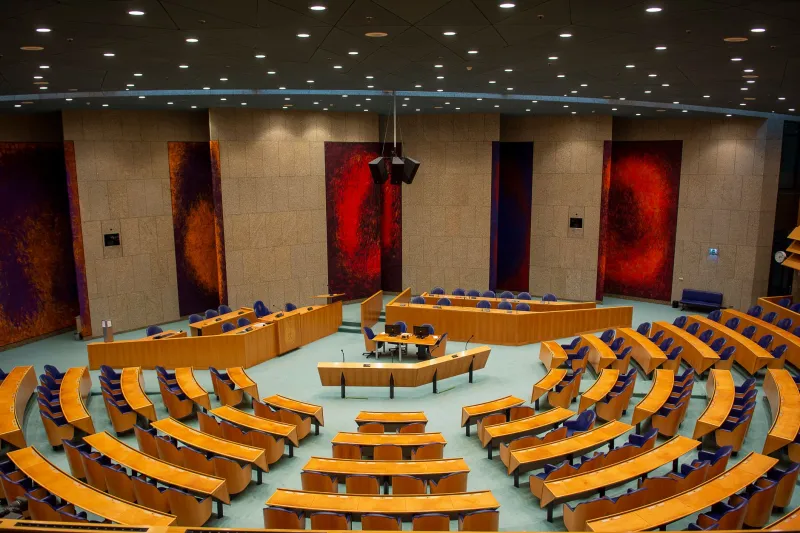
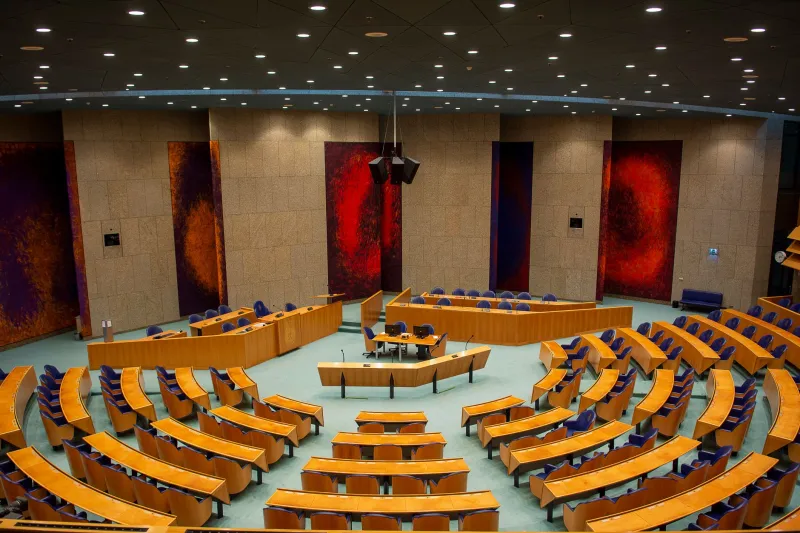
Few artefacts of the European Parliament are as unglamorous, or as revealing, as the attendance register. Members sign in for plenary sittings, committee meetings are minuted, and roll-call votes are published with the name of every member attached to every aye, no and abstention. Assembled over a six-year term, these documents form a ledger of presence. For UKIP — a party that went to Brussels in 2014 explicitly to argue that the institution should not exist — that ledger has always carried an awkward political charge.
What the registers actually measure
The first thing to say is that "attendance" is not one number. The Parliament's records distinguish between presence at plenary part-sessions in Strasbourg and Brussels, participation in committee and delegation meetings, and the much narrower question of whether a member was in the chamber for a particular roll-call vote. A member can be recorded as present for a part-session and still miss the vast majority of votes held that week; equally, a member can be absent from a Thursday morning sitting while sitting in a committee room in another building.
This matters because the public argument about UKIP's European record has tended to collapse all three into a single accusation or a single defence. The published registers do not support a single verdict. They show a cohort with a wide internal spread — some members with attendance figures indistinguishable from the parliamentary average, others with sustained gaps that are difficult to explain away.
The delegation that changed shape
Any statistical reading of the 2014–2020 term has to reckon with the fact that the UKIP delegation was not a stable object. Twenty-four members were returned in May 2014. Over the following five years the group was eroded by defections, suspensions and resignations, until the party contesting the 2019 European elections bore little resemblance to the one that had topped the poll five years earlier.
That churn has a direct effect on the numbers. Averages calculated across the whole term blend members who served six years with members who served eighteen months, and they blend the attendance habits of a settled group with those of a fractious one. Former staff who worked for the delegation describe the practical consequence: pairing arrangements, once informal but workable, became harder to sustain as colleagues stopped speaking to one another.
Protest, abstention and the difference between them
It is often assumed that a party opposed in principle to the European Parliament would express that opposition by staying away. The record suggests something more nuanced. Abstention — recorded formally in the roll-call data — was a visible, attributable act, and it was used. Absence, by contrast, is ambiguous: it can signal protest, but it can equally signal a diary conflict, an illness, or a flight missed from Birmingham to Brussels.
What the voting record does show is a pattern of selective engagement. On files touching fisheries, state aid, the single market and the terms of withdrawal, UKIP members were frequently in the chamber and frequently voting. On the long tail of technical reports that make up much of the Parliament's legislative business, participation thinned markedly. Whether that constitutes a failure of scrutiny or a rational allocation of scarce time is a judgement the registers themselves cannot make.
The committee grind
The most under-reported part of the ledger is committee work. Plenary speeches are filmed and clipped; committee sittings are not. Yet it was in the Committee on Fisheries, and to a lesser extent in the committees dealing with international trade and constitutional affairs, that UKIP members did the work most likely to leave a trace in the statute book.
Here the spread within the delegation is at its widest. Members who secured committee places and treated them seriously built up a substantial record of amendments, opinions and questions. Others, particularly in the final two years of the term, were recorded rarely. Staff testimony from the period is consistent on one point: the members who did the committee work tended to be the same people who turned up to plenary, and the members who did not, did not do much of anything in Brussels.
Comparing eurosceptics
The obvious comparator is the other eurosceptic formations of the period — the Europe of Freedom and Direct Democracy group in which UKIP sat for most of the term, the Europe of Nations and Freedom, and the European Conservatives and Reformists. Comparisons are treacherous, because group sizes, national party cultures and the proportion of members holding dual mandates all vary. Broadly, however, the UKIP cohort's aggregate attendance sat in the same band as its fellow travellers rather than at the extremes, with a longer tail of low-attendance members than the ECR's more disciplined national delegations.
That tail is the finding most worth dwelling on. It is not that UKIP MEPs as a body were uniquely absent. It is that the variance within the delegation was unusually large — a reflection, former advisers say, of a party that selected candidates for a national message rather than for a parliamentary career.
Why the ledger still matters in 2026
Seven years after the last UKIP MEP left the building, the registers remain the only neutral account of what the party's European presence actually consisted of. They do not settle the argument between those who regard the MEP era as a costly irrelevance and those who see it as the bridgehead that made Brexit possible. They do something more useful: they show that the answer depends on which member, which committee and which year you look at.
For an archive, that is the point. Attendance data is not a verdict. It is evidence — and it is evidence that anyone claiming to assess UKIP's European legacy ought to have read before pronouncing on it.