The Staff Who Outlasted the MEPs: UKIP’s European Parliamentary Network After 2019
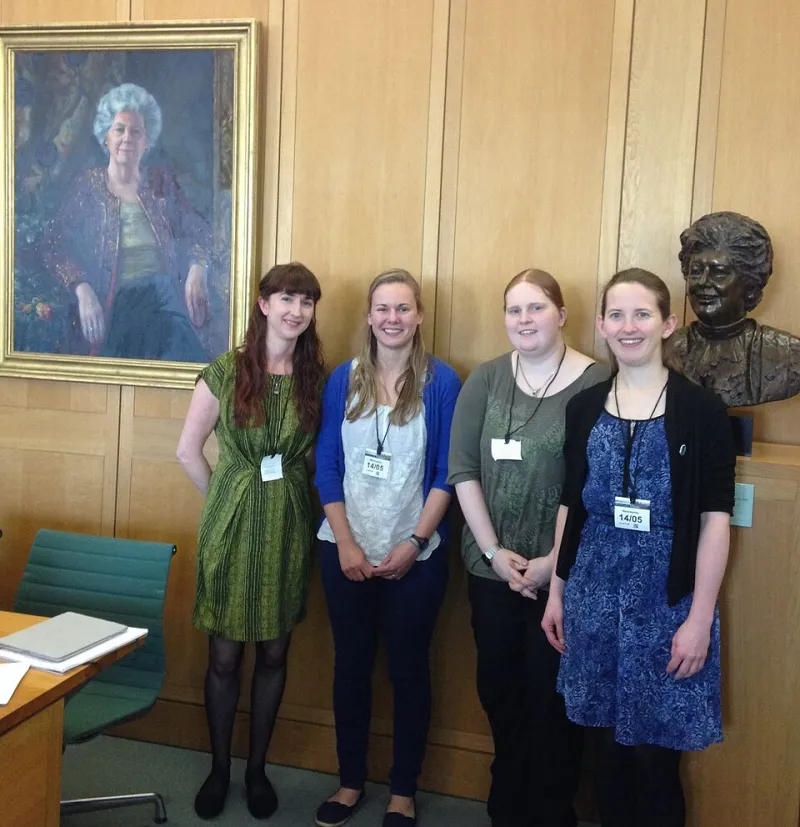
Photo: Teague Soderman, Solar System Exploration Research Virtual Institute, Public domain, via Wikimedia Commons
The MEPs are the ones in the photographs. They speak in the chamber, vote in committee and appear on the evening news. Behind them, in offices in Brussels and Strasbourg and in constituency surgeries across the UK, worked a smaller and less visible group: advisers, researchers, press officers and office managers. Between 2014 and 2019, the European Parliament was their workplace. When UKIP lost its seats, they dispersed. Many did not leave politics.
A Parliamentary Apprenticeship
The European Parliament gave UKIP something Westminster rarely offered in the same period: a payroll large enough to employ a professional staff. Each MEP had allowances for assistants, and the party’s group in the parliament provided additional support. For a party with limited resources, this was an employment bureau as much as a political operation.
Staff learned procedure, languages and the rhythms of a multinational assembly. They drafted amendments, prepared briefing notes, managed diaries and handled press enquiries. They also learned how to navigate a institution that UKIP’s public rhetoric often dismissed. That contradiction was useful training. A researcher who spent years tracking fisheries or environment files could later explain Brussels to a Westminster audience with unusual precision.
The archive’s MEP papers contain traces of this work: handwritten notes on committee agendas, draft speeches with staff annotations, email chains about travel and expenses. They are not glamorous records, but they show a professional apparatus being built in real time.
2019: The Dispersal
The 2019 European elections ended UKIP’s MEP presence. The party won no seats, and the 2014 cohort’s staff lost their parliamentary base. The dispersal was rapid. Some advisers moved to the new Brexit Party delegation, which needed experienced people quickly. Others found roles in Westminster, in media, in public affairs or in campaigns outside Parliament.
Former staff describe the period as both a rupture and an opportunity. The rupture was personal: colleagues lost jobs, offices closed and the routines of five years ended. The opportunity was professional. The European Parliament had given them a credential that few in British politics possessed: direct experience of how EU legislation is made.
That credential became more valuable, not less, after Brexit. As the UK negotiated its future relationship with the EU, knowledge of the parliament’s procedures, committees and political groups was in demand. The network that had served UKIP’s MEPs began to serve a wider set of employers.
Four Trajectories
A composite picture drawn from the archive’s interviews suggests four common paths. The first is the procedural specialist: a researcher or adviser who moved into public affairs, consultancy or trade association work, using their knowledge of EU files. The second is the media operator: a press officer who moved into broadcasting, publishing or party communications. The third is the campaign organiser: someone who moved between referendum campaigns, leadership contests and local election efforts. The fourth is the office manager: the person who kept the Brussels or constituency office running and who later applied those skills in a think tank, a consultancy or a party headquarters.
These are not neat categories. People moved between them. A researcher became a press officer; a campaign organiser became a special adviser; an office manager became a compliance officer. The common thread is that the European Parliament gave them a network and a vocabulary that outlasted the MEPs they worked for.
The Network After the MEPs
By 2026, the UKIP MEP staff network is scattered but not dissolved. Some former staff remain in and around politics, working for successor parties, campaign groups or public affairs firms. Others have left the sector entirely. The network survives in informal ways: shared contacts, old email groups, the occasional reunion, a willingness to offer advice to former colleagues.
This is not unique to UKIP. Every party that has lost a parliamentary base sees its staff disperse. But UKIP’s case is distinctive because the European Parliament was its main national platform for a period. The party’s MEPs used the chamber to argue for leaving the EU; their staff used it to build careers that often continued after Brexit.
The archive’s interest is not in gossip about who went where. It is in the structure of a professional class. The European Parliament trained a group of people who could operate across British and EU politics at a time when those two worlds were separating. That group did not disappear when the MEPs did.
What the Archive Can Still Recover
Staff records are harder to find than speeches. They sit in correspondence, contracts, diaries and the marginal notes of committee files. The archive’s collection of MEP papers offers a starting point, but it is incomplete. Former staff who kept notebooks, press clippings or internal briefings hold part of the history.
The story of UKIP’s MEP staff is therefore both a party history and a professional history. It shows how the European Parliament became a training ground and networking hub for a wider Brexit-era class, and how that class outlasted the MEPs themselves. The MEPs left in 2019. The network they left behind did not.