Ten Debuts in Strasbourg: The UKIP Speeches That Set the 2014 Term's Tone
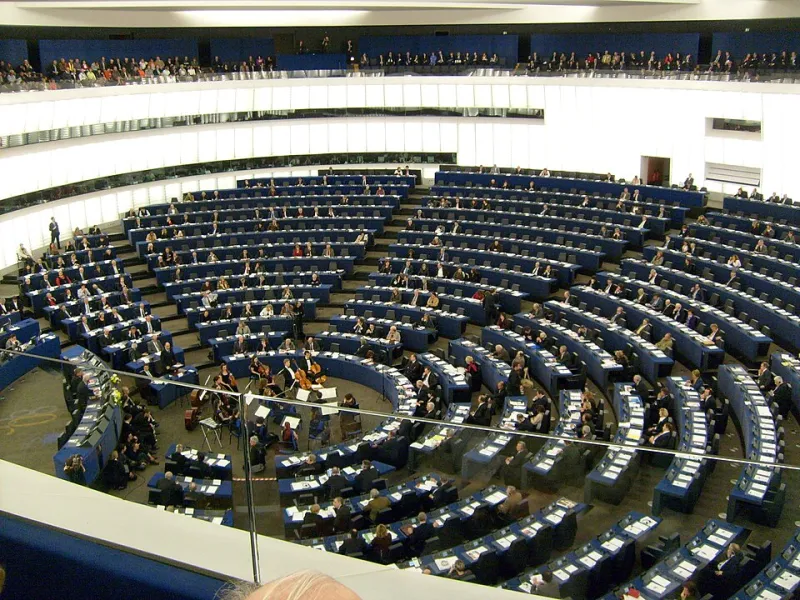
Maiden speeches are the European Parliament's equivalent of a first impression. They rarely change legislation, but they set a tone. For UKIP's 2014 intake, elected as the party topped the UK European election poll with 24 MEPs, the debut speeches were something more: a public statement of intent from a group that believed the chamber it had just entered should have fewer powers, not more.
The speeches varied widely in polish and substance. Some were broadsides against the European Union as a political project. Others were unexpectedly technical, dwelling on regional funding, fisheries rules or medicines regulation. Read together, they map the arguments UKIP would carry into the 2016 referendum and beyond. They also reveal how much of the party's Brussels rhetoric was aimed less at the Parliament than at the voters back home.
Patrick O'Flynn: the sovereignty question
Patrick O'Flynn, the former political editor turned MEP for the East of England, used his debut to reduce the European argument to a single question. The line that lingered was: 'The question is not whether we like Europe; it is who governs Britain.' It was a deliberate move away from cultural Euroscepticism and towards a constitutional claim about authority.
That framing aged well. The sovereignty argument became the spine of the Leave campaign, and it survived the detailed economic disputes of 2016 because it did not depend on forecasts. What now looks more dated is the assumption that leaving the EU would settle the question. The UK's post-Brexit debates over the Northern Ireland protocol, trade deals and regulatory divergence showed that sovereignty is often a starting point for argument, not its conclusion.
Diane James: business and the single market
Diane James, elected for the South East, brought a business background and a preference for practical examples over abstractions. Her speech argued that small firms were being buried by rules designed for larger organisations. The key line was: 'Small businesses do not need another directive; they need a decision-maker who understands them.'
The complaint was recognisable, but it now reads partly as a period piece. Brexit removed the UK from the EU's regulatory system, yet British firms continued to encounter complex rules, often of domestic origin. The speech captured a genuine frustration with Brussels. It did not anticipate that leaving would create a new regulatory relationship to manage.
Steven Woolfe: freedom of movement as a policy choice
Steven Woolfe, a North West MEP with a legal and financial services background, made immigration central. His argument was that freedom of movement was not an immutable principle but a policy choice made by governments. The memorable formulation was: 'Freedom of movement is a policy choice, not a natural law.'
This was one of the most consequential arguments of the term. It moved the debate from whether migration was economically useful in aggregate to whether the public had consented to the rules that produced it. The argument had force. The economic claims attached to it were more contested, and the referendum campaign often blurred the two. Woolfe's line has aged as a political intervention; it has not aged as a settled economic judgment.
Jonathan Arnott: regional funding and the rebate
Jonathan Arnott, the North East MEP and former mathematician, took a different route. His speech focused on structural funds and the circularity of sending money to Brussels and receiving a portion back. The line was: 'The North East sends money to Brussels and waits for some of it to come back with a ribbon on it.'
It was a sharp summary of a long-standing Eurosceptic complaint, and it has worn reasonably well. The UK's departure replaced EU structural funds with domestic arrangements, but the underlying question of how poorer regions are funded did not disappear. The speech was also a reminder that UKIP's case was not only about laws and borders. It was about visible public spending and who got credit for it.
Louise Bours: the NHS and trade
Louise Bours, a North West MEP, used her debut to warn about the NHS in the context of transatlantic trade negotiations. The line was: 'The NHS is not a bargaining chip in a trade deal.' The specific controversy over the Transatlantic Trade and Investment Partnership has faded, and the more alarmist claims about the NHS being sold off did not materialise in the way some campaigners suggested.
Yet the speech was not simply a period piece. Public concern about the NHS and international trade proved durable, and the argument that health services should be explicitly protected in trade agreements became a standard political demand. Bours's debut showed how UKIP could borrow from the left as well as the right when health was at stake.
Paul Nuttall: the democratic deficit
Paul Nuttall, a North West MEP and historian by training, made the institutional case. His speech centred on the European Parliament's limited ability to initiate legislation. The key line was: 'A parliament that cannot initiate legislation is a parliament in name only.'
The claim was constitutionally arguable rather than simply polemical. The European Parliament has gained powers over time, but it does not hold the formal right of initiative enjoyed by many national legislatures. That institutional critique has aged well. It also exposed a tension in UKIP's approach: the party used the Parliament as a platform while denying that it was a proper parliament.
Margot Parker: employment regulation
Margot Parker, elected for the East Midlands, focused on labour market rules and the burden they placed on small employers. Her line was: 'One size never fits all in a labour market as varied as ours.' It was a familiar argument, but it was delivered with less heat than some of the party's plenary interventions.
The speech has aged in a revealing way. Brexit did not end the debate over employment regulation. It transferred much of it to Westminster, where the same tensions between flexibility and protection continued. Parker's contribution is best read as a critique of centralised rule-making, not as a prediction that leaving the EU would make the issue disappear.
Julia Reid: medicines and regulation
Julia Reid, a South West MEP with a background in health, chose medicines regulation rather than the usual anti-EU themes. Her argument was that patients needed faster access to treatments and that regulatory processes could be slow and risk-averse. The line was: 'Patients need regulators to be fast, not merely thorough.'
This was one of the more surprising maiden speeches of the intake. It showed that UKIP MEPs could engage with technical policy when they chose to. The specific institutional landscape has changed since 2014, not least because the European Medicines Agency left London after the referendum. The speech now looks less like a period piece than a preview of post-Brexit debates about the UK's own regulator.
Nathan Gill: fisheries and Wales
Nathan Gill, the Wales MEP, used his debut to connect fisheries policy to coastal communities. The line was: 'Fisheries policy was decided in Brussels long before it was explained in Cardiff.' It was a neat way of linking the European issue to devolved politics.
Fisheries became one of UKIP's most effective themes, and Gill's speech anticipated why. The common fisheries policy was concrete, visible and easy to explain. It also had a strong regional dimension. The argument aged well in the sense that it helped drive the Leave case. It aged less well as a promise, because the post-Brexit fisheries settlement remained contested between the UK government, the devolved administrations and the fishing industry.
David Coburn: Scotland and the common policy
David Coburn, the Scotland MEP, was among the party's most colourful performers. His maiden speech on fisheries mixed grievance with a demand for fairness. The line was: 'Scotland's fishermen did not ask for a common policy; they asked for a fair one.' Coburn's style often overshadowed his substance, but the fisheries argument was serious.
It has aged reasonably well because it avoided the temptation to promise that leaving the EU would solve everything. The demand for fairness could survive the transition to a new legal framework. Whether the UK's own arrangements have delivered that fairness is a separate question, and one that the archive's fisheries coverage continues to track.
What the debuts reveal
The maiden speeches were not legislative blueprints. They were positioning statements from a party that saw the European Parliament as both a stage and a target. The arguments that have aged best are the constitutional ones: sovereignty, the democratic deficit, the circularity of regional funding and the visibility of fisheries policy. The arguments that look most like period pieces are those tied to specific controversies, such as TTIP or particular EU directives.
What stands out in 2026 is how quickly the 2014 intake moved from debut to referendum campaign. The speeches set the tone for a term in which UKIP's MEPs were never fully inside the Brussels system and never entirely outside it. They were there to argue against the institution, and they did so with varying degrees of detail. The best of the debuts showed that the case could be made with policy as well as protest. The weakest showed how easily a first speech can become a slogan.