Strasbourg’s Last Sitting, the Campaign’s First Priority: UKIP’s MEPs in June 2016
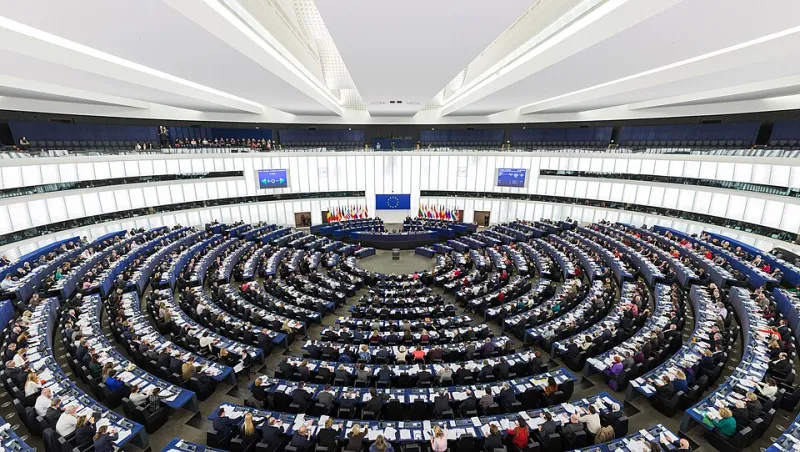
Photo: Diliff, CC BY-SA 3.0, via Wikimedia Commons
The European Parliament’s June 2016 part-session in Strasbourg ran from 6 to 9 June, a little over a fortnight before the United Kingdom voted on 23 June. For UKIP, it was the last full plenary before the referendum. Ten years on, that week is easily overlooked. The campaign dominated the headlines, and the chamber’s business continued with the ordinary rhythms of committee reports, resolutions and votes. Yet the final sitting before polling day is a useful archive point: it catches UKIP in the act of being two things at once — an insurgent national campaign and a European parliamentary group with payroll, procedure and public duties.
A Parliament Still Sitting
The Strasbourg week was not a farewell session. The Parliament had a full agenda, and UKIP’s MEPs were entitled and expected to take part. The party’s broader argument was that the institution should be left; the institution itself did not stop working while that argument was being made. That contradiction was not unique to UKIP, but it was sharper for a party whose central purpose was withdrawal.
The plenary record is therefore more mundane than the campaign literature. It contains speeches, explanations of vote and the administrative evidence of a group still functioning. For an archive such as this one, that matters. It prevents the referendum period from being remembered only as a series of rallies and television appearances. The European Parliament continued to sit, and UKIP’s representatives continued to be recorded in it.
The Split Screen
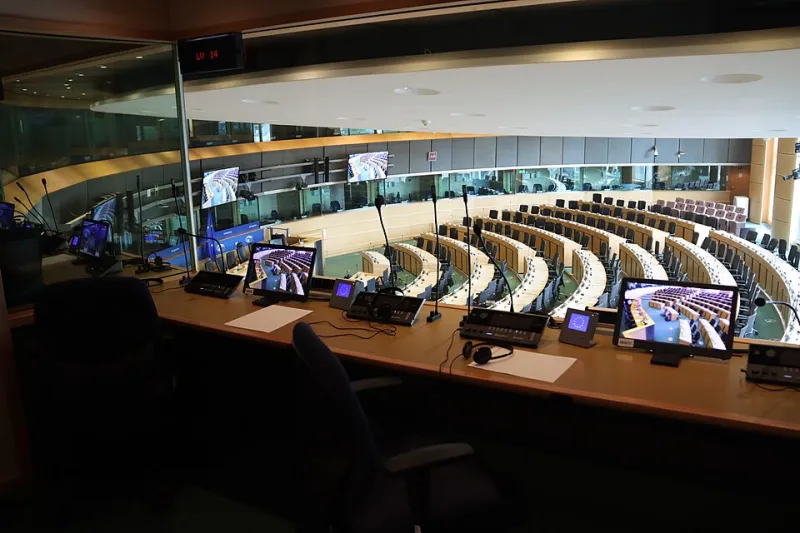
The final plenary before 23 June is best understood as a split screen. On one side was the chamber: a place of interpreters, voting lists and allocated speaking time. On the other was the UK campaign: a national contest in which UKIP’s leading figures were in demand, and in which the party’s MEPs were often more useful as campaigners than as legislators.
That division did not map neatly onto a list of who stayed and who left. Some MEPs remained in Strasbourg for the votes and returned to the UK afterwards. Others were already heavily committed to regional and national campaigning. Staff moved between Brussels, London and the constituencies. The public record rarely captures the full travel diary, and attendance registers alone cannot explain why a particular MEP was absent from a particular debate. What can be said is that the party’s centre of gravity had shifted. The European Parliament was no longer the main stage; it was one stage among several.
What the Votes Could and Could Not Show
The votes taken in that Strasbourg week were not, for the most part, referendums on the referendum. They were the ordinary business of a parliament: reports, amendments and resolutions. UKIP’s MEPs voted as members of the Europe of Freedom and Direct Democracy group where group discipline applied, and according to party position where it did not. The archive is cautious about reading too much into individual votes from that week. A vote on a technical report is not a statement on British membership of the EU, however much the campaign atmosphere invited such readings.
What the record does show is continuity. UKIP’s MEPs were still participating in the Parliament’s procedures at the very moment when their party was asking the British electorate to leave it. That is not hypocrisy; it is the ordinary condition of a parliamentary party operating inside an institution it opposes. The final plenary illustrates the point more clearly than any later retrospective account.
The Group Behind the Campaign
The campaign could not have functioned without the parliamentary operation behind it. UKIP’s MEPs provided offices, staff, mailing capacity and a public platform. The party’s European parliamentary group had been built over two years, and in June 2016 it was still being used. The final plenary was part of that infrastructure: a place where UKIP’s representatives could speak, table questions and maintain a presence that fed the wider argument.
That dual identity had costs. A party that campaigns against a parliament is always open to the charge that it should not draw a salary from it. UKIP’s answer was that its MEPs were there to expose the institution and to represent voters who wanted out. The final Strasbourg sitting does not settle that argument. It simply records the fact that both roles were being performed at once.
Ten Years On
In 2026, with a decade having passed since the referendum, the last plenary before polling day is a modest but useful document. It shows that the campaign did not pause the Parliament, and the Parliament did not pause the campaign. UKIP’s MEPs moved between the two, some more visibly than others. The result was neither a clean parliamentary record nor a pure campaign operation, but a hybrid that was characteristic of UKIP’s European years. The final plane to Strasbourg carried members who knew that the argument had already moved home.