Dormant Domains: The MEP Websites That Became UKIP's Accidental Archive

Search for the name of almost any former UKIP MEP in 2026 and the results are oddly stratified. There will be a Wikipedia entry, a handful of news reports from the 2014 or 2019 campaigns, and then — often on page two or three — a website that stopped moving sometime between the Lisbon Treaty and the withdrawal agreement. A banner advertising a monthly newsletter. A photograph with a slightly dated crop. A contact form that still promises a reply within five working days.
These pages are rarely maintained and frequently broken. Yet taken together they constitute one of the more revealing sources on the UKIP MEP era, precisely because nobody designed them as a historical record.
An Archive Nobody Commissioned
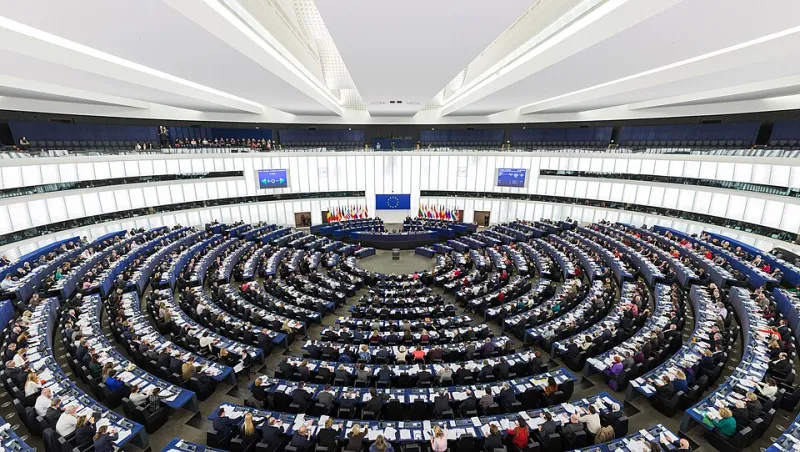
Parliamentary papers, committee attendance registers and plenary voting lists tell us what MEPs did in Strasbourg and Brussels. They say much less about how European representation was explained to voters in Bolsover, Boston or Blaenau Gwent. The constituency-facing websites of UKIP's MEPs were built for the latter purpose, and they were built quickly, at modest cost, by regional campaigners, sympathetic web designers and, in some cases, the MEPs' own staff.
The result is an uneven but unusually candid corpus. Some sites are polished multi-page affairs with downloadable leaflets; others are little more than a landing page and a link to a Twitter feed. Several regional domains have lapsed and been re-registered by unrelated businesses — a development that ought to concern anyone relying on search engines rather than the Internet Archive. Where the Wayback Machine holds periodic snapshots, the record survives; where it does not, the material is simply gone.
The Biography as Manifesto
The 'About' page was where the political argument was made. A standard template emerged across many of the sites: a short account of a working life outside politics, a paragraph on the constituency link, and then a closing statement on sovereignty and self-government. The variation is instructive. MEPs from fishing constituencies wrote biographies that began with the industry; those from the South East often opened with commuting, housing pressure and the cost of regulation.
Read individually, these are routine political self-descriptions. Read together, they show a party translating a constitutional argument into local idiom — and doing so with more consistency than the national literature of the period sometimes suggests. The European Parliament was rarely described in these pages as a legislature. It was described as a place from which to argue for departure.
Press Offices That Never Closed
The press release sections are the most affecting part of the corpus. Dozens of short statements, often dated and numbered, announce a speech, a visit, a question tabled, a vote recorded. Many carry the flat, functional tone of a constituency office rather than a national campaign: a meeting with a port authority, a letter to a minister, a note of support for a local museum bid.
The proportion of releases about the European Parliament itself is lower than might be expected. For every statement on a plenary vote there are two or three on domestic matters that had little or no European dimension. This is partly a function of how UKIP MEPs understood their mandate — as a platform rather than a committee assignment — and partly a reflection of what local media would accept. Editors in regional newspapers were not short of Strasbourg copy in 2015. They were short of stories about their own constituencies.
The Surgery Page and the Promise of Access
Contact details are the most mundane and most historically useful element of these sites. A postal address in a town centre. A mobile number, sometimes a landline, occasionally a second office shared with a regional association. Surgery times, often monthly, in a library or a working men's club.
These details matter because they establish something the parliamentary record cannot: the geography of access. The distribution of advice sessions across a European constituency — a unit with no equivalent in Westminster — shows which towns an MEP judged worth the travel, and which were left to email. It also shows the practical limits of the surrogate constituency. An MEP covering an entire region could hold perhaps ten surgeries a year. The demand implied by the phones and inboxes of that period was considerably greater.
Broken Promises, Literal and Otherwise
There is a temptation to treat these sites as a ledger of unfulfilled pledges, and some of the material invites it. Newsletter sign-up forms that were never wired to a mailing list. 'Latest news' sections last updated in 2016. Pages promising a full record of votes that were never built.
The more careful reading is that the digital infrastructure simply outlived the organisation that sustained it. Websites are cheap to leave standing and expensive to keep current. When a regional office closed, or a member of staff moved on, the site stayed up as a kind of default. The promises on it were not so much broken as abandoned — which is a distinct and less dramatic category, though no more flattering to those responsible.
Why This Matters in 2026
Six years after the last UKIP MEP left office, these pages are being consulted for purposes their authors never anticipated. Local journalists use them to date visits and establish positions. Historians of the Brexit campaign use them to trace how the European argument was localised. Residents pursuing long-running casework sometimes find the only surviving record of a correspondence on a dormant contact page.
There is also a public-interest argument for preservation that has nothing to do with UKIP. The European Parliament's own archives are thorough but institutional. They record the MEP as legislator, not the MEP as constituency representative. The websites capture the second role, imperfectly and at low resolution, and they are degrading faster than any official collection.
A Modest Recommendation
Anyone with an interest in the period — former staff, researchers, local libraries — could do worse than submit the remaining live domains to the Internet Archive before renewal lapses. It is a small act of housekeeping with a long shelf life.
These sites were never intended as monuments. That is precisely why they are worth keeping. They show the UKIP MEP era as it was presented to the public: provisional, argumentative, occasionally vainglorious, and always unfinished. In a decade or two, the broken contact forms may be the most honest documents we have left.